970-986-7051

gastondesigninc@gmail.com

E. Robledo

Traveling Exhibition: Mexican Roots

Masks, Prints and Traditional Arts of Mexico​

Perhaps the closest we will ever come to the alien invasion portrayed in Science fiction movies is the collision of the Spanish and Mexica(Aztec) empires in 1519. Imagining a violent encounter between two more radically disparate civilizations is difficult. Still, we can see how powerfully this event has reverberated through Mexico’s history to the present day. It has shaped the country’s society, religion, and politics, as well as its culture and popular arts.

As tragic as the conquest and colonization were, they have positively resulted in the vibrant blend of art and culture that is the hallmark of modern Mexico. What makes Mexico’s popular art so unique is that, unlike the folk art of many cultures, Mexican popular art is not the product of a single cultural tradition but the fusion of Mexican prehispanic society with the world brought by the Europeans. European art and religion were the primary influences on the work of existing native cultures, but early trade brought by the Europeans also significantly impacted Mexican artisans. From Middle Eastern ceramics to Asian lacquer, ivory carving, and porcelain, many world cultures influenced Mexican popular art.

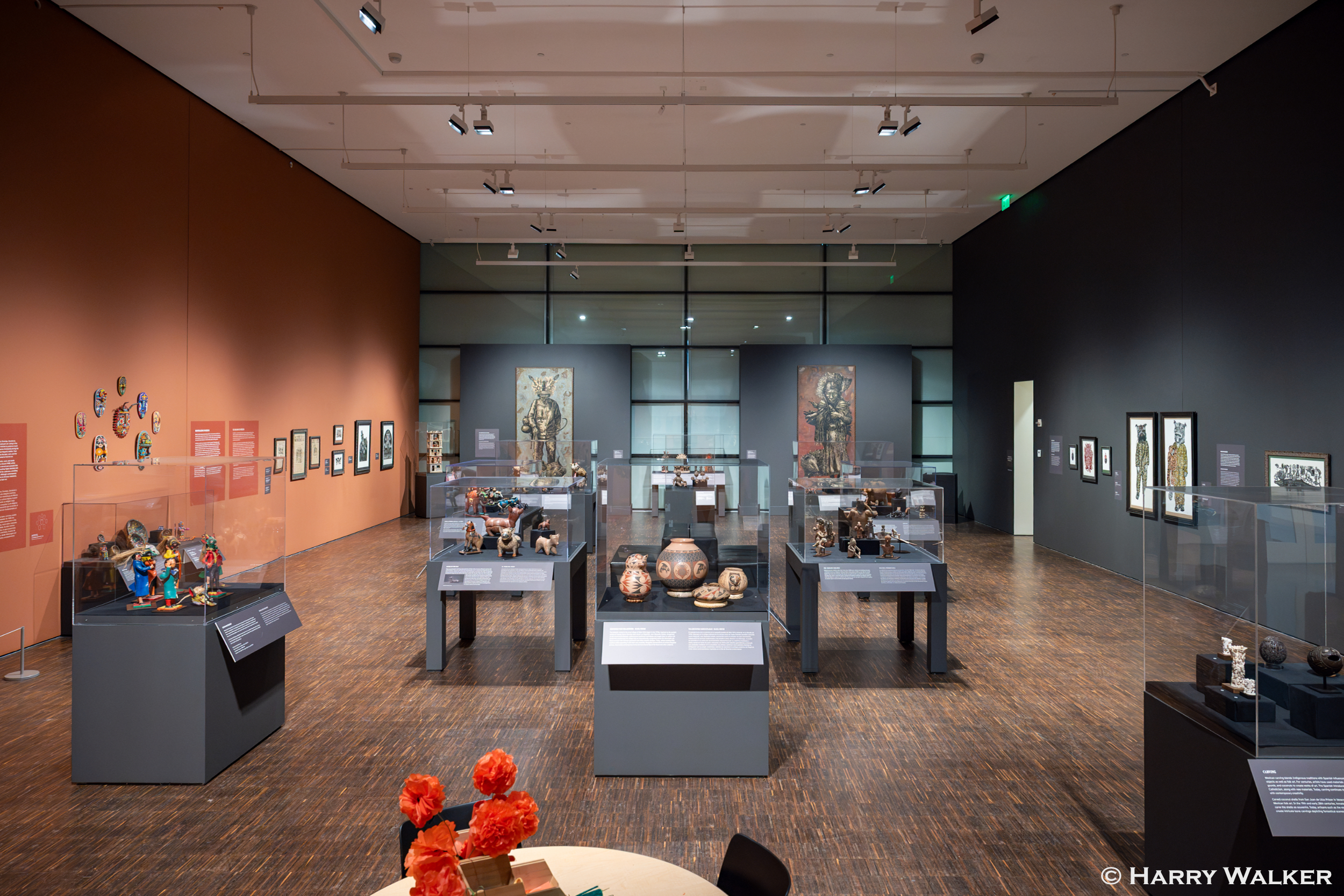
 Through ancient, antique, and contemporary work, this exhibit examines how these diverse cultures, combined with Mexico’s indigenous traditions, historically shaped the country’s popular art. Additionally, it highlights how contemporary artists in Mexico view and draw inspiration from the cultures and events that have created their history.

9054
D. Castillejos

THEMES

– The tradition of Masks in Latin America

– Mexican Masks 

– Printmaking in Mexico & Oaxaca 

– Tecuanes masks of Zitlala 

– Barbones masks 

– The tastoanes of Tonala 

– Diablo masks of Michoacan 

– Alebrijes of Oaxaca 

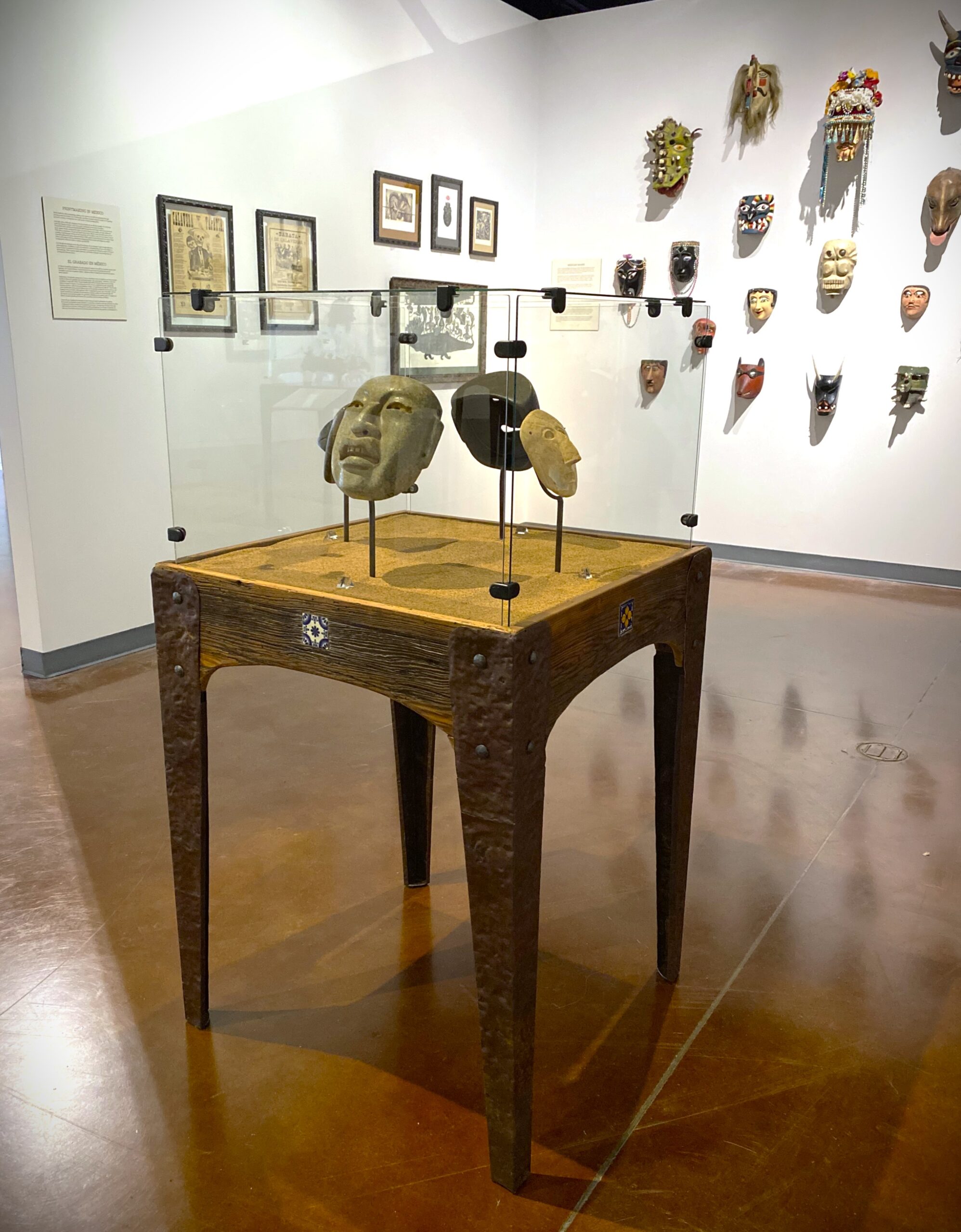
– Pre-Hispanic ceramics


SPECIFICATIONS

– 1,500-3,500 sq. ft. 

– 8-10 foot minimum ceiling height recommended 

– Recommended 2 month minimum rental 

PRICING

Affordable rates with transportation included; please inquire.

TO BE PROVIDED BY THE HOSTING VENUE

– Lights and barriers

– Heavy equipment required for access, installation and dismantling

– Storage facilities for transport cases

– Promotion and publicity

– Staffing during exhibition run

Mexican Roots
Mexican Roots
E. Robledo
Mexican Roots
The Tradition of Masks in Mexico and Latin America

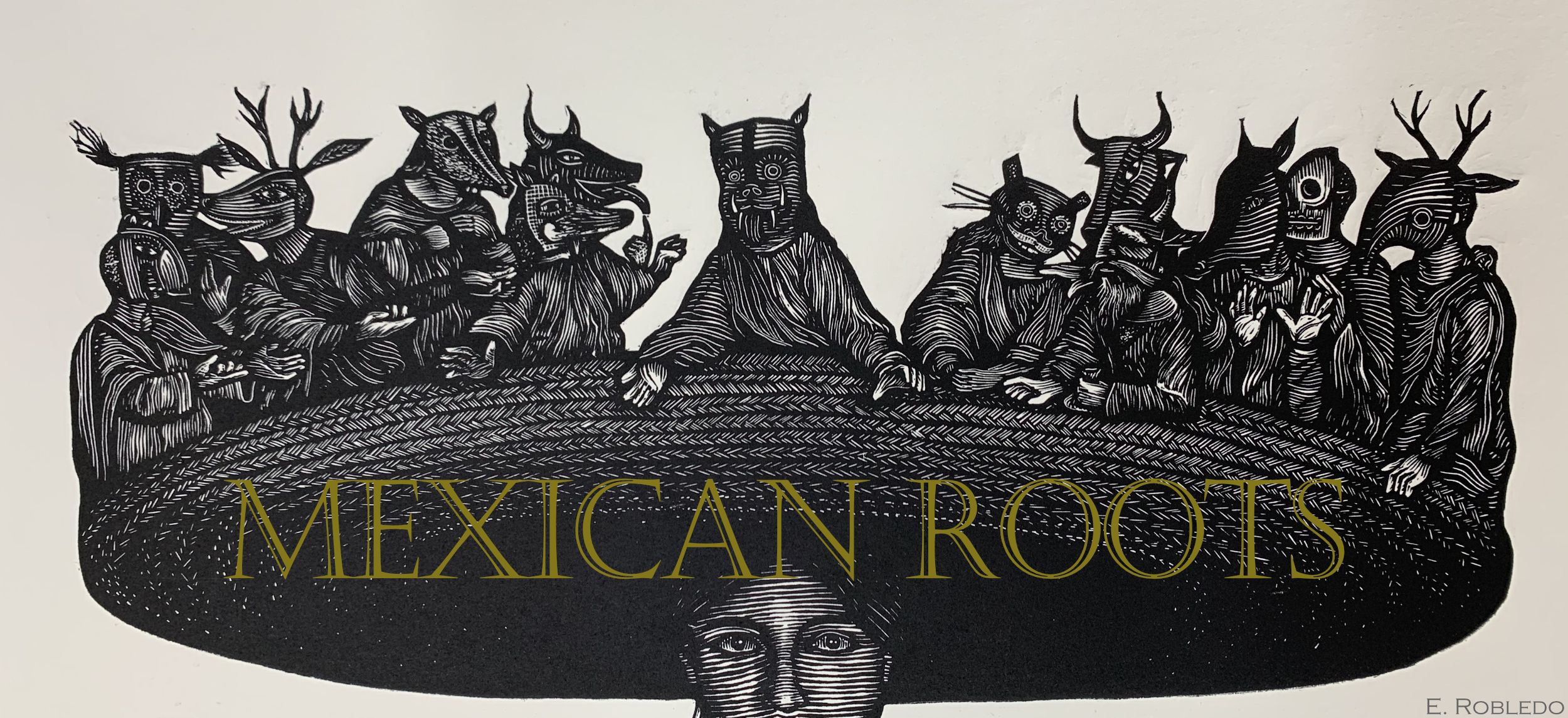
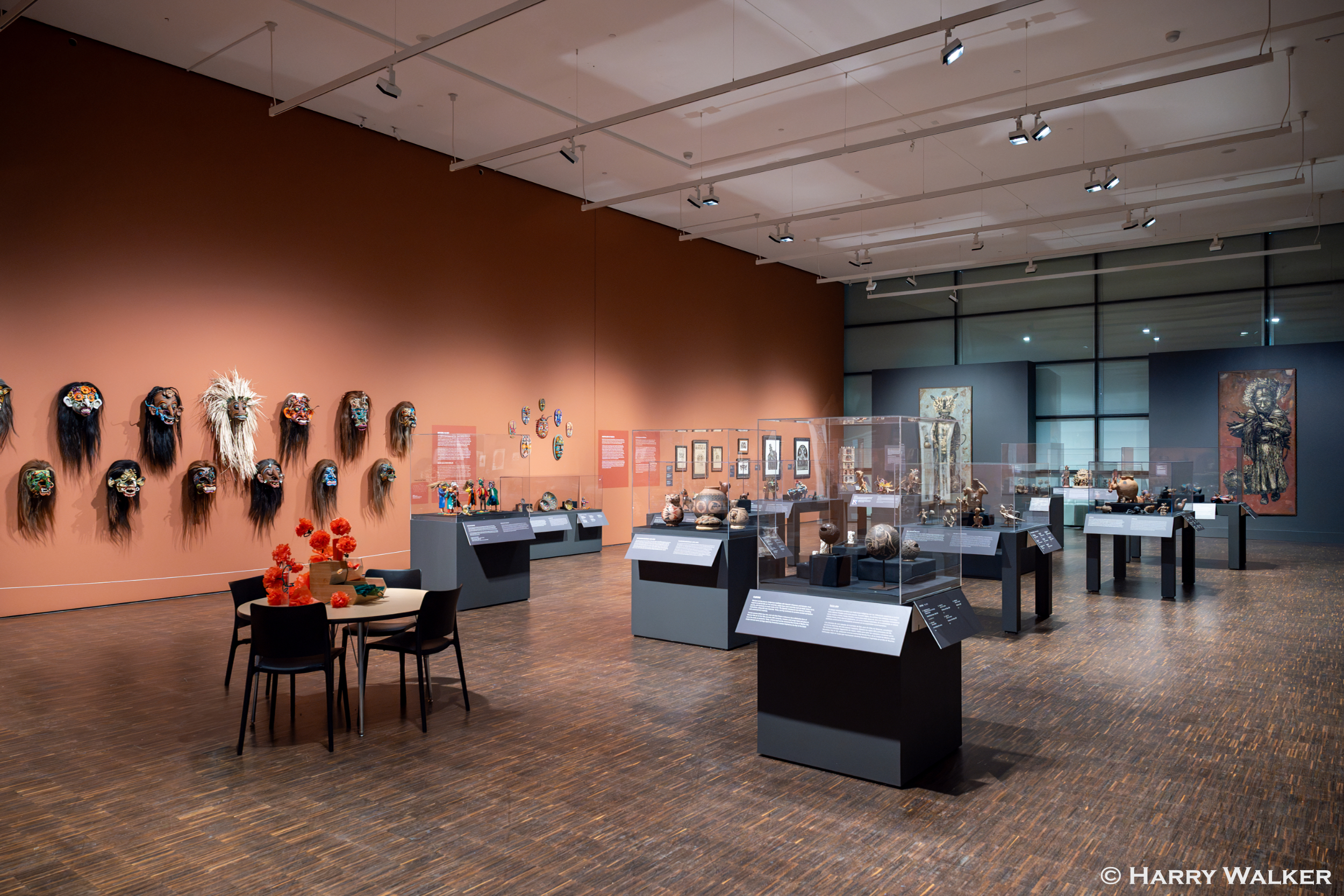
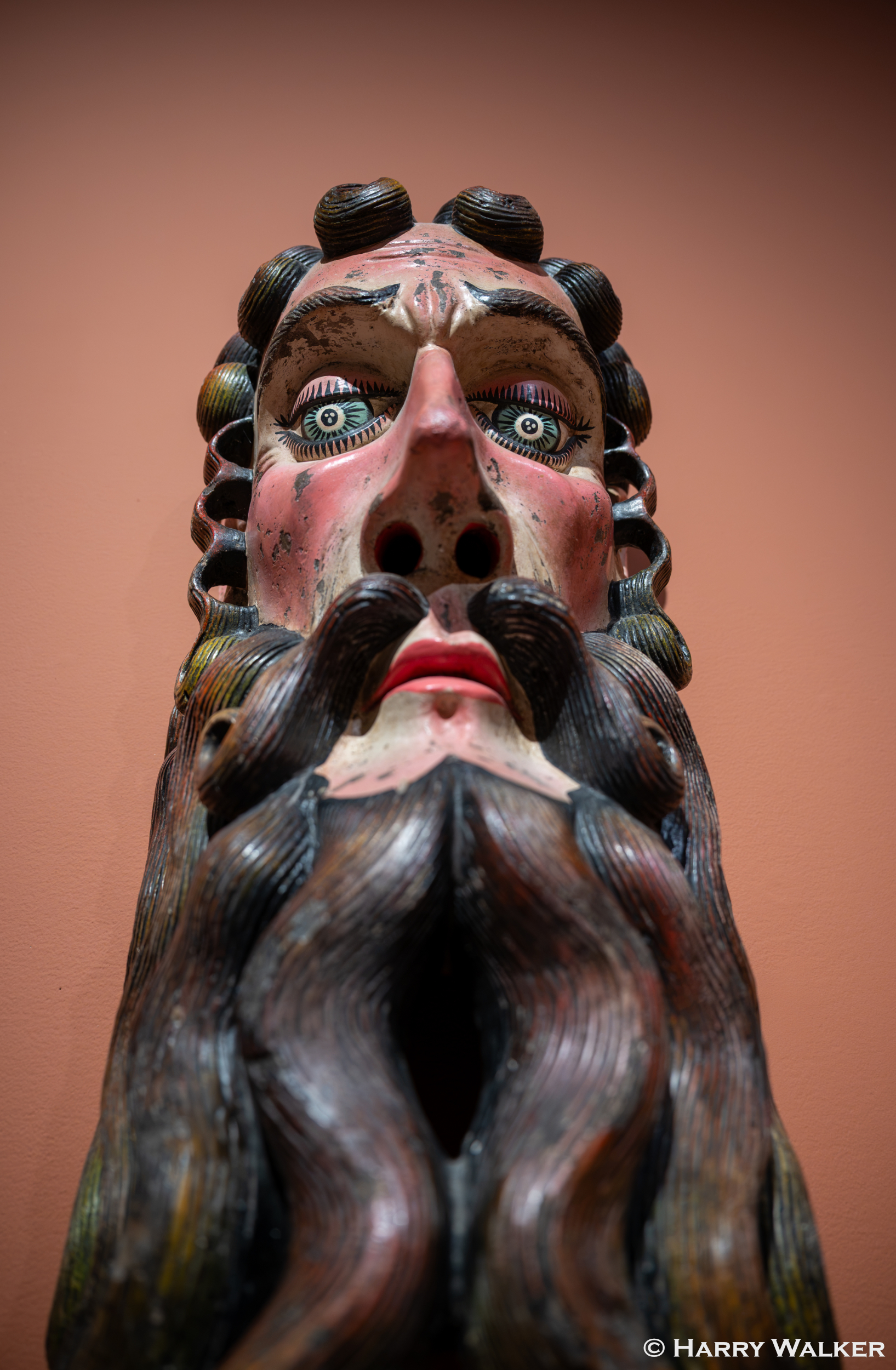
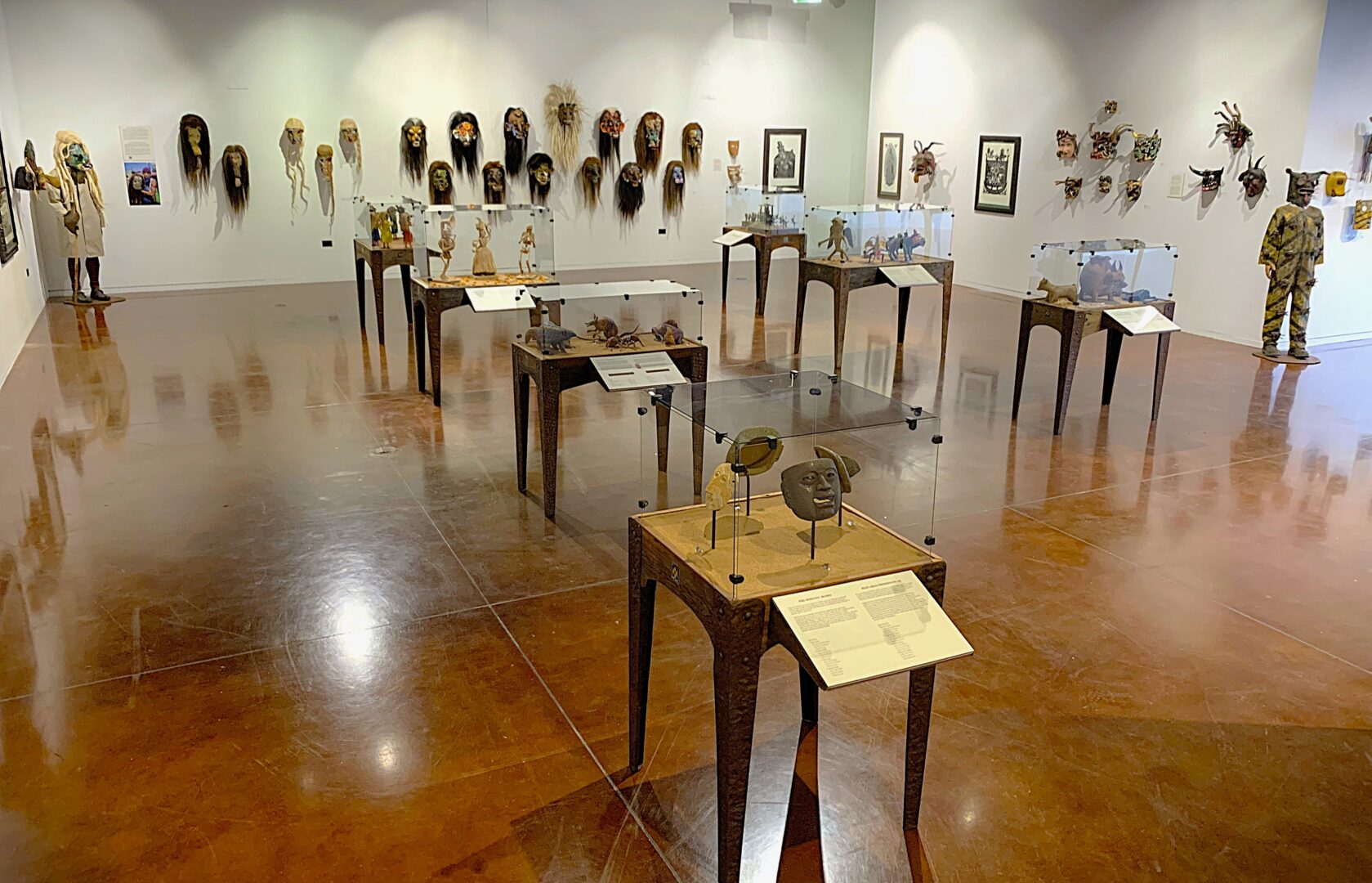
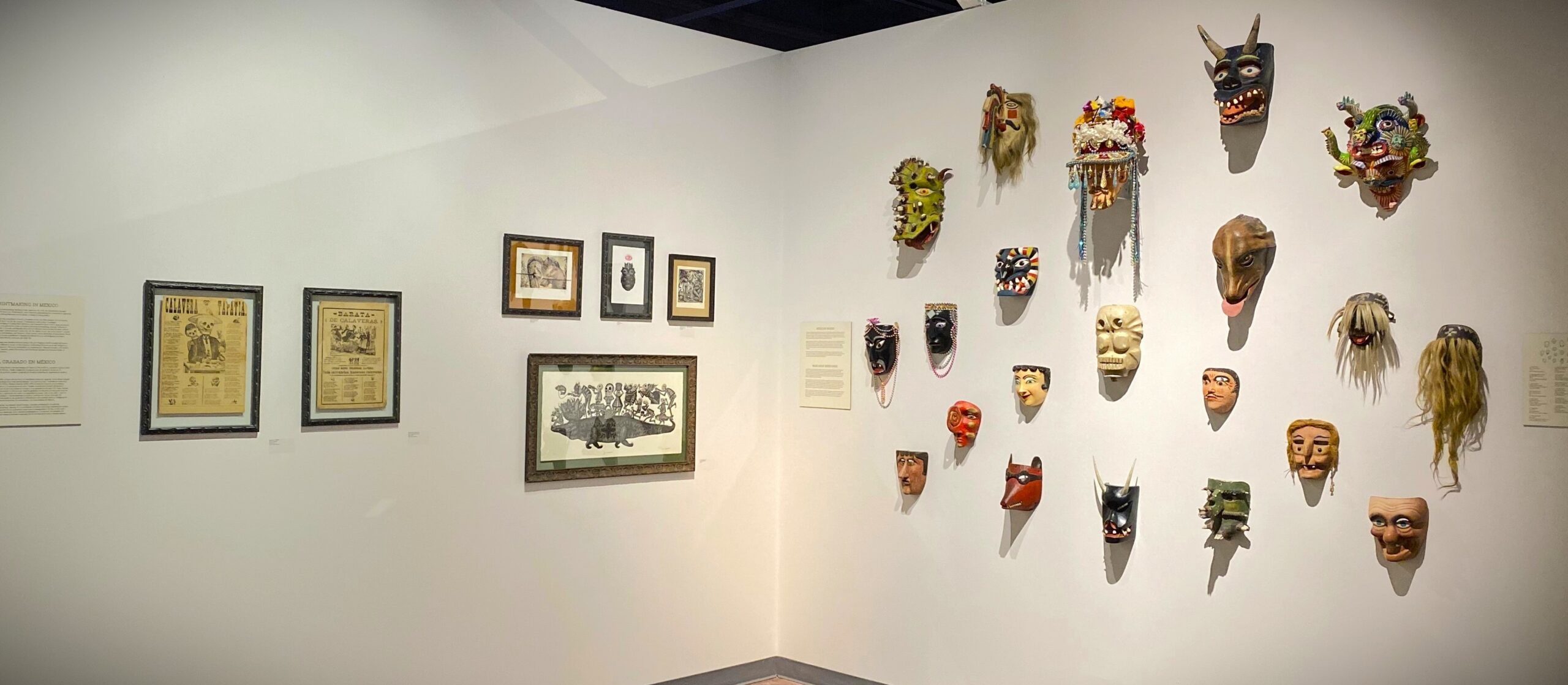
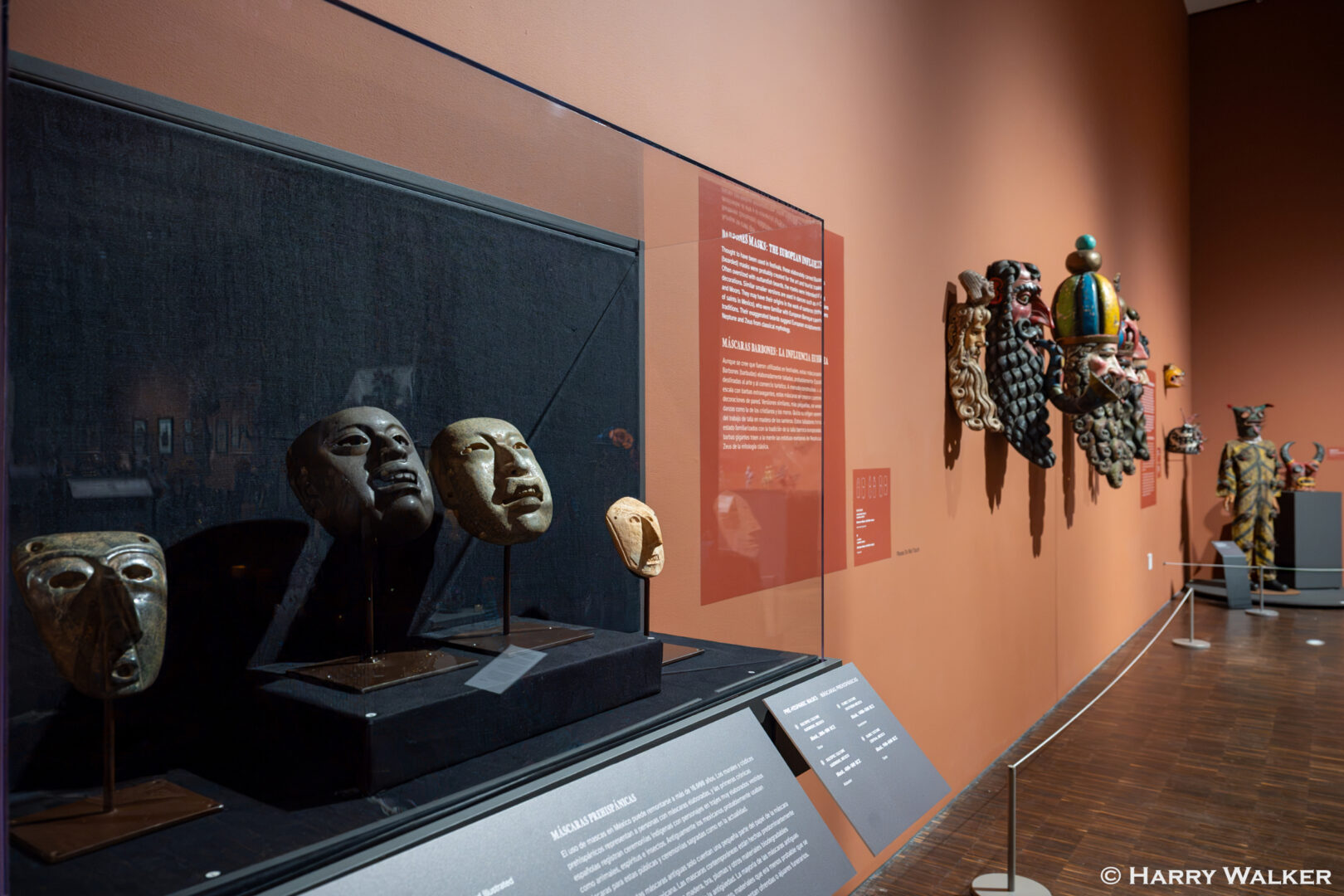
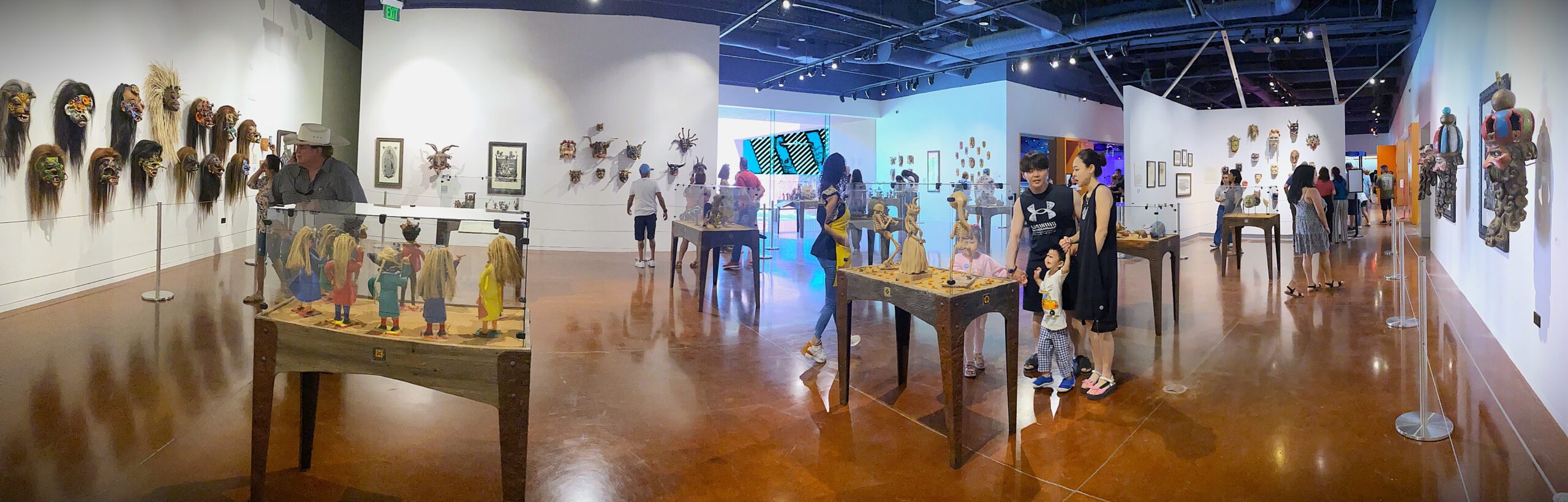
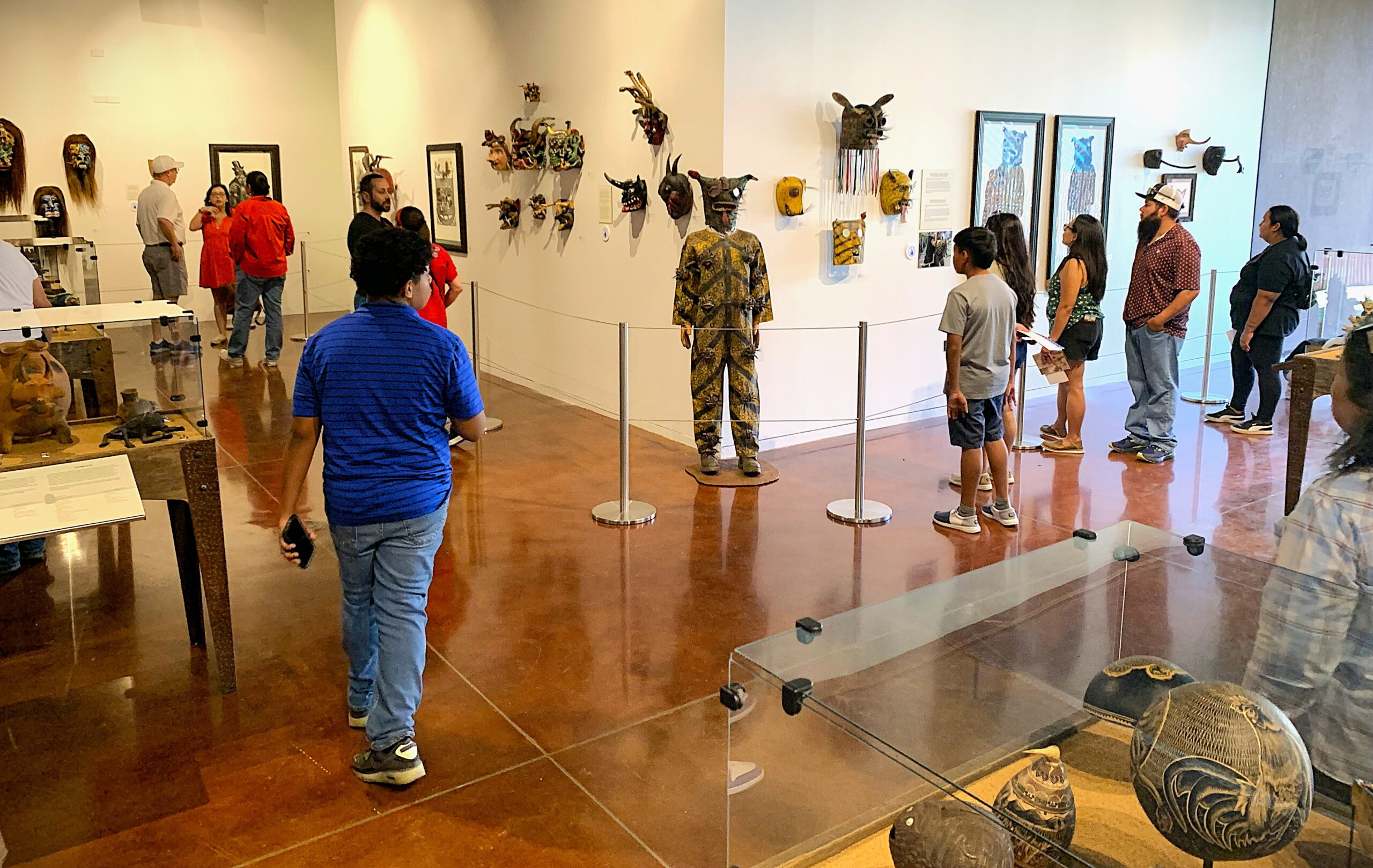
Over 75 masks, each with a unique story, were selected to illustrate Mexico’s rich tradition of masks and festivals. These festivals, integral to Mexican religious and social life since pre-Hispanic times, testify to the country’s rich history. Like other popular art media, masks and festivals now blend Christian and pre-Hispanic themes and icons, reflecting Mexico’s cultural evolution. Mexican Roots also explores the mask as an art form. In contemporary Mexican culture, the mask has evolved beyond its traditional role, becoming a popular art subject increasingly admired outside festivals and ceremonies. The exhibition presents powerful examples of wood, clay, and Cartonería (paper mache) masks from some of Mexico’s leading artists, who continue to honor and preserve this rich tradition.

 
Mexican Roots
Mexican Roots
Printmaking in Mexico

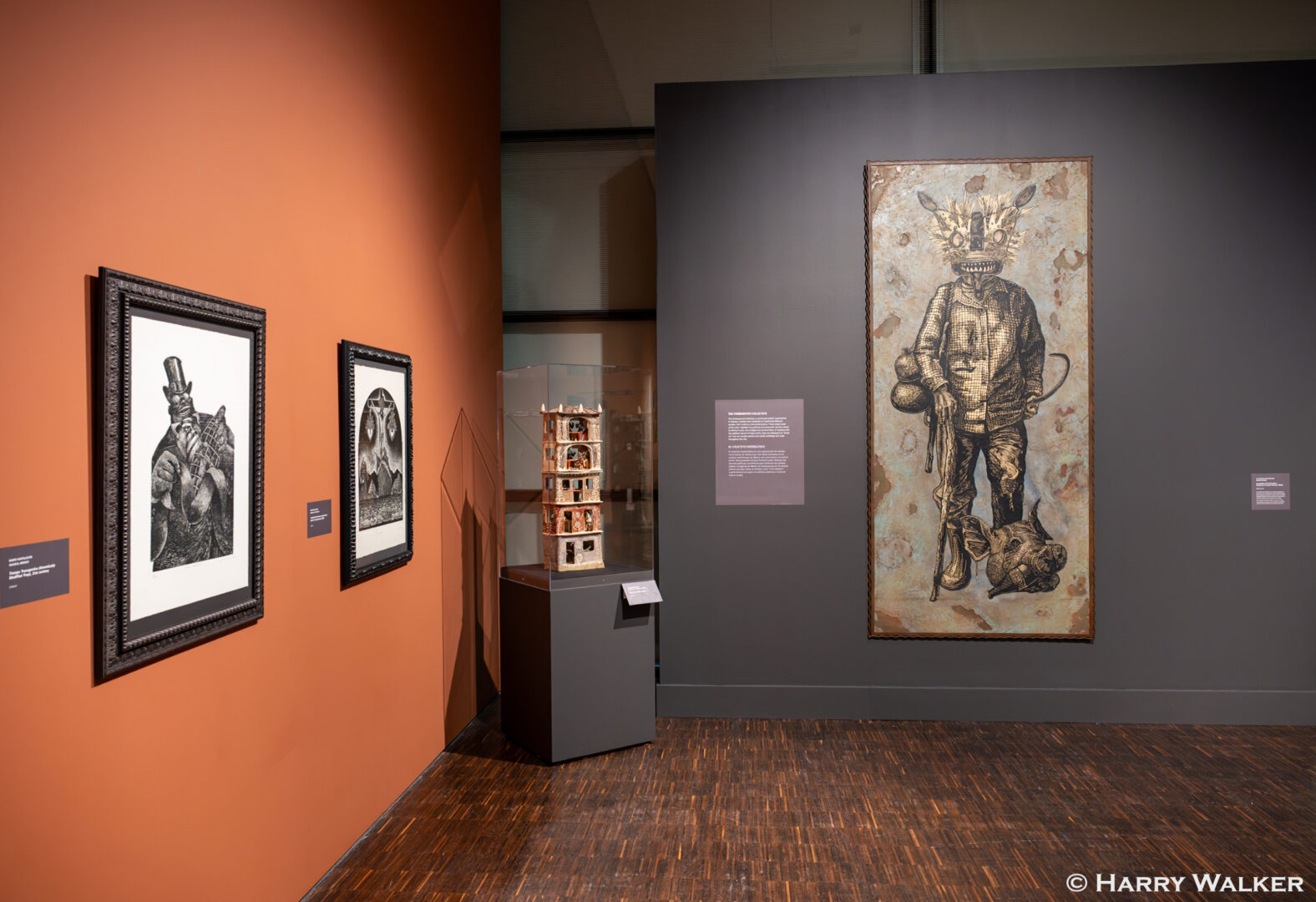
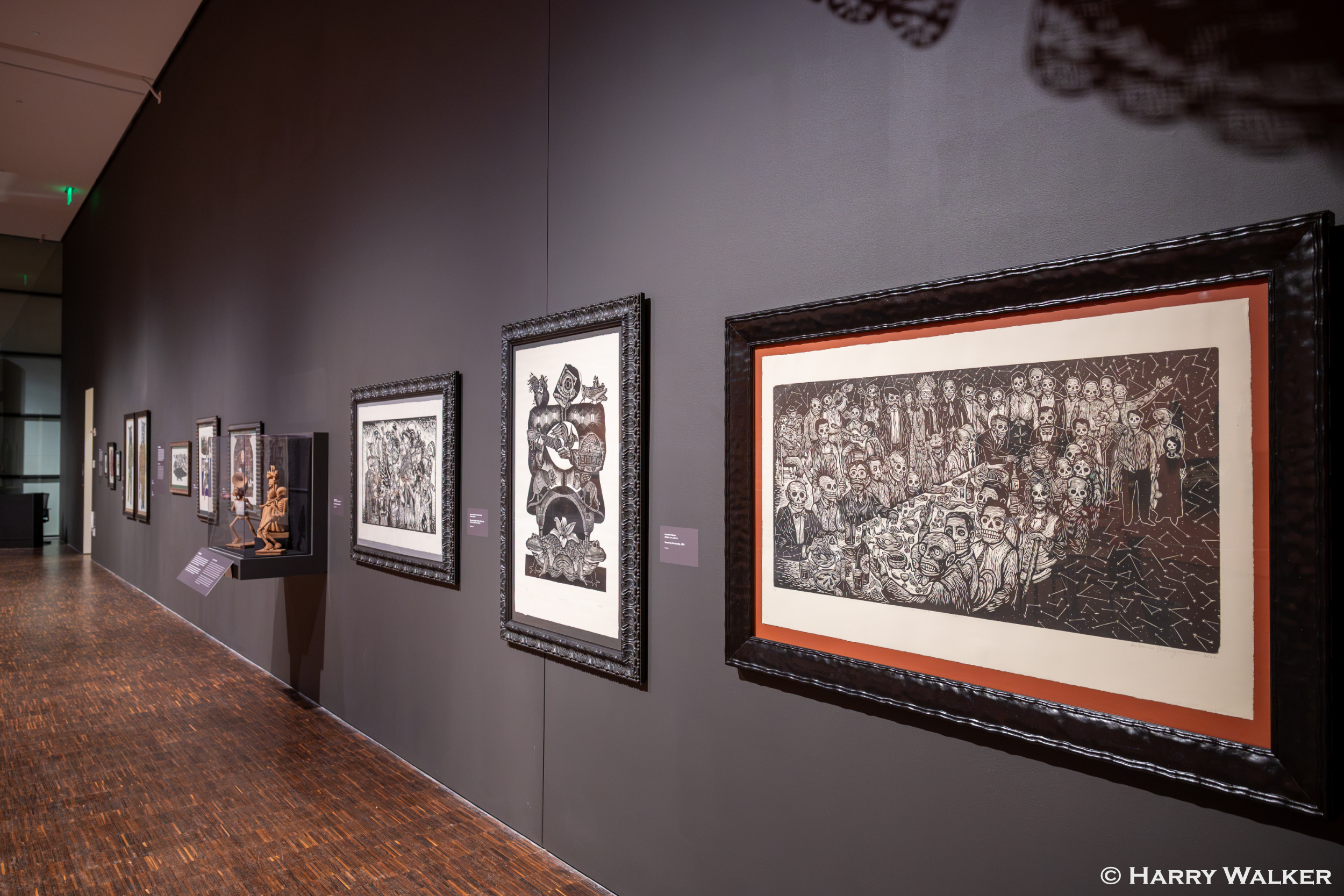
One of the most unique aspects of Mexican Roots is the combination of prints with popular art. Prints, often overlooked as popular art, are in fact the epitome of it. In Mexico, prints have a rich history as’ art for the people,’ a testament to their accessibility and inclusivity. Printmakers such as Jose Guadalupe Posada and Manuel Manilla gained widespread recognition for their work in penny papers, further cementing the connection between art and the masses.

Alongside the historic prints, the exhibit offers a fascinating exploration by contemporary printmakers. These artists delve into the profound European impact on Mexico’s indigenous cultures. Their depictions of masks, nature, and religion serve as a visual testament to this ongoing cultural conversation.

Mexican Roots
Mexican Roots
D. Barraza
Mexican Roots
E. Robledo
The Tastoanes of Tonala

The fiesta de Santo Santiago, a unique celebration, is observed in various Mexican states. The most renowned festivities take place in the city of Tonala, just outside Guadalajara. 

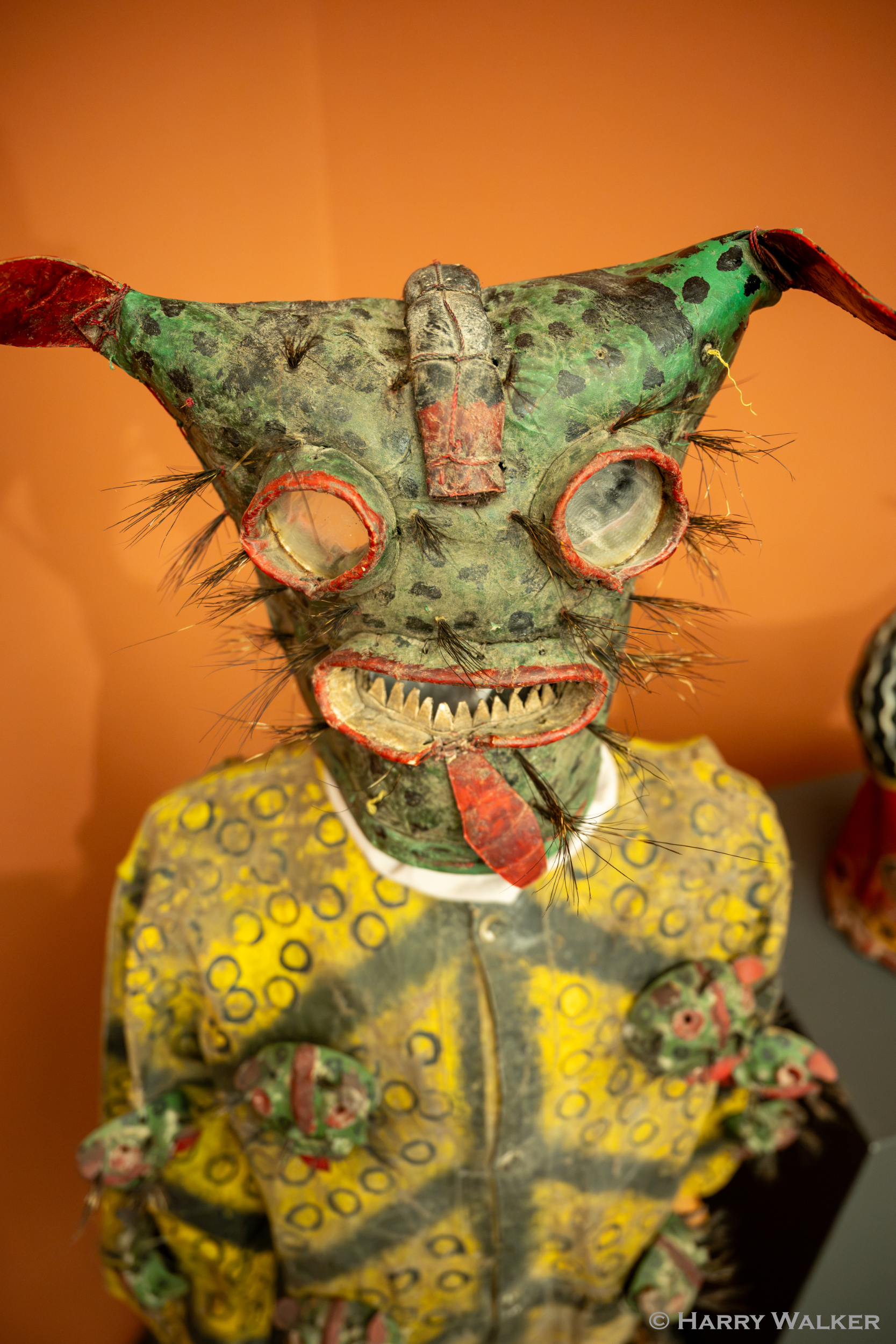
The venerated Saint James, also known as Santo Santiago, symbolizes the conquest of Spain and Christianity over the indigenous people (Tastoanes). However, the celebration has evolved to incorporate the narrative of the bravery and hardships endured by the native population during the Spanish colonization.

During the fiesta, a mock battle occurs in which St. James uses a whip against the Tastoanes. He is killed or captured, then revived. Eventually, he triumphs over the Tastoanes.

The Tastoanes masks, with their painted spots and insects, hold a profound symbolic significance. They represent not only the ferocity of the natives but also the devastating impact of the smallpox and plagues brought by the Europeans, a poignant reminder of the historical context.

Mexican Roots
E. Uribe
Mexican Roots

Video by Alejandro Basan

Mexican Roots
A. Basan
Mexican Roots
Mexico's Indigenous "surrealism"

When outsiders view Mexican art it may seem surrealistic or be categorized as “magical realism”. These qualities in Mexican work do not originate as much from any art movement as from the history of Mexico itself. 

The depictions of the natural world, plants, animals, death, etc. stem from common themes of pre-Hispanic times. The collision of multiple cultures and religions has fused into a uniquely Mexican art world that may seem strange or exotic to those unfamiliar with it. 

Mexican Roots
D. Castillejos
E. Robledo
A. Basan
Mexican Roots
G. Morac
https://gastondesign.com/wp-content/uploads/2022/11/9478.jpg
A. Basan
Mexican Roots
Featured Artists

MASK ARTISTS

– Jacabo & Maria Angeles

– J. Castro

– Eliseo Garcia

– Juan Horta

– Felipe Horta

– Norberto Lucano 

– Rafael Mesa Oliva

– Gerardo Ortega 

– Hugo Horta Ramos

– Martin Salgado 


 2D ARTISTS

– Santiago Luis Arturo 

– Daniel Barraza

– Alejandro Basan 

– Dario Castillejos 

– Silverio Herrera

– Alvaro Medina

– Gabriela Morac

– Amarildo Olmedo

– Eduardo Robledo

– Adrian Amarildo Olmedo Sanchez

– Jose Silverio

– Gallery Subterraneos

– Jonathan Badillo Martinez

– Samael Aguero Sanchez

– Carlos Hernandez Davila

– Alex Meza

– Leopoldo Mendez

– Manuel Alfonso Manilla

– Artemio Rodriguez

– Ivan Bautista

– El Pinch Grabador

– Daniel Montelliano Herrera 


ALFENIQUE

– Jose Ignacio Gonzales Quinzanos

– Casa Zarco


BONE

– Jose Manuel Ruiz

– Roberto Abraham Ruiz

3D ARTISTS

– Jose Ortega

– Margarita Santiago

MIXED MEDIA

– Elisa Uribe

WOOD

– David Hernandez Workshop

– Laura Hernandez

– Leticia Hernandez

– Carlos Zurc

– Carolina & Jesus Sosa Santiago

– Pantaleon Ruiz


 CARTONERIA 

– Pedro Linares

– Miguel Linares

-Recardo Linares

– Ignacio Rojas

– Raul Lopez

– Los Ramirez Castaneda

CERAMICS

– Carlomango Pedro Martinez

– Cecilio Sanchez Fierro

– Gerardo Acia

– Gorky Gonzalez

– Asael Castillo Serrano

– Guillermo Serrano Gutierrez 

– Javier Ramos Lucano

– Javier Martinez Mendez

– Gabriela Perez Martinez

 ARTWORK

– Up to 80 traditional & contemporary Mexican masks

– Up to 35 contemporary Mexican prints

– Up to 30 traditional and contemporary 3D works

– Up to 12 display cases

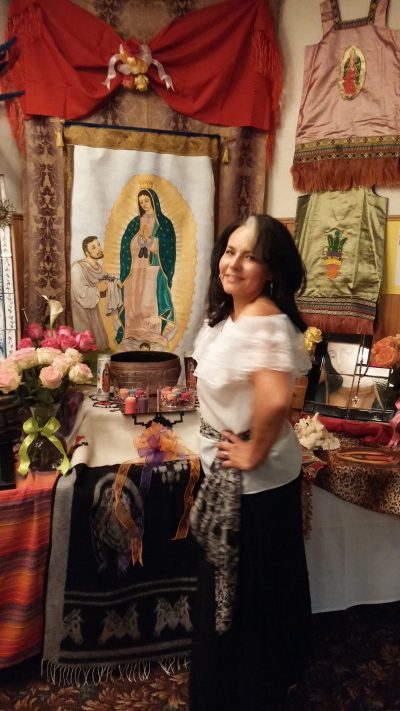
Gaston Design is proud to present our two latest traveling exhibitions, Lives of the Dead and Mexican Roots, curated by Maria Elisa Uribe.
Elisa, born in Guadalajara, Mexico, has been passionate about Mexican art and design since childhood. She holds art degrees from the University Autonomous of Guadalajara and Colorado Mesa University. With over 35 years of experience as an artist, designer, and educator, she has participated in numerous exhibitions and received several awards.
Elisa draws inspiration from nature and Mexican culture, stating, “My work is tied to my culture, traditions, and beliefs like a tree rooted to the earth.”  

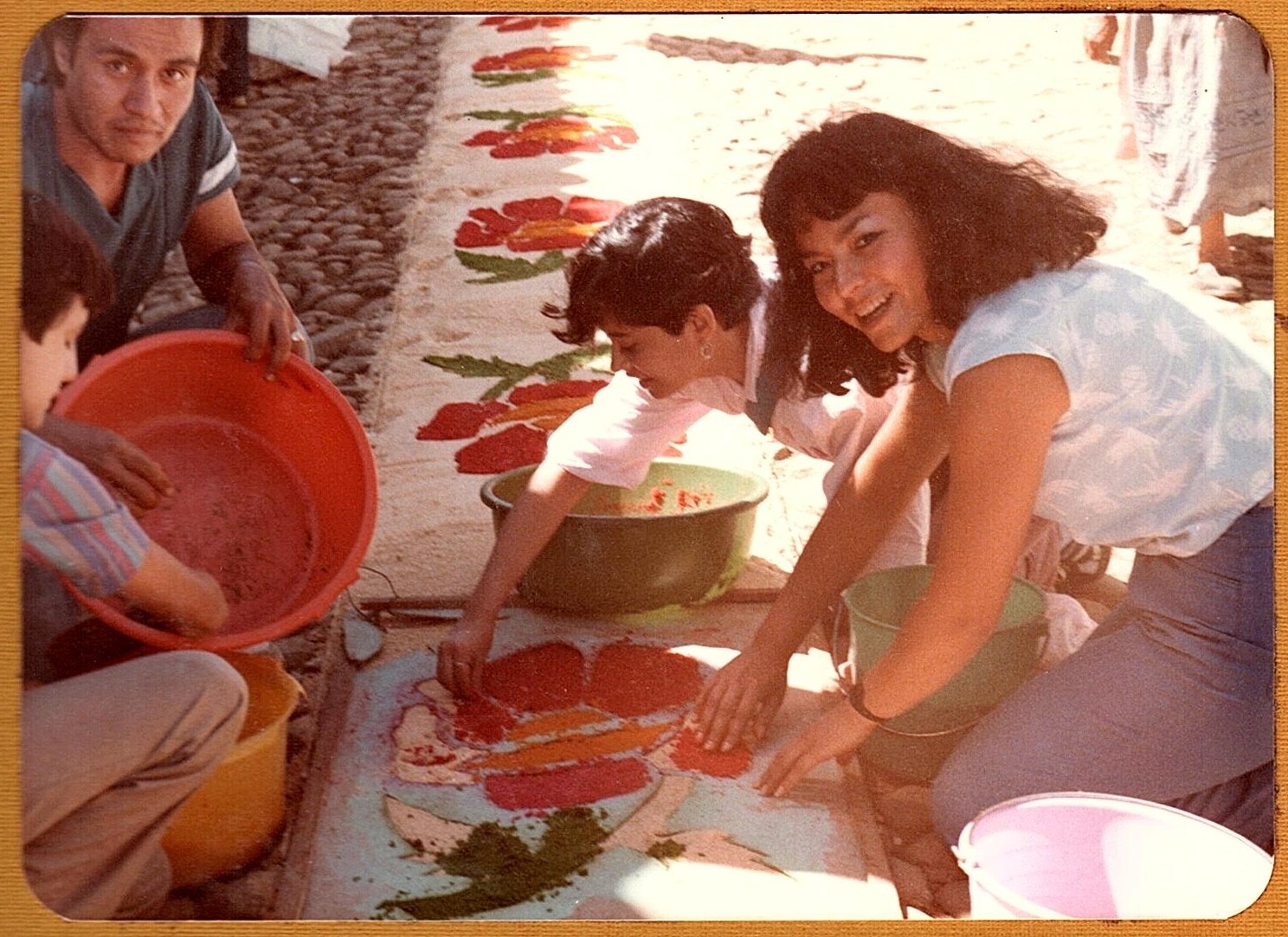
Día de Muertos preparations, ca. 1981, Patamban, Michoacán, México

IMG_0172 (1)

María Elisa Uribe

ABOUT GDI

Gaston Design specializes in paleontology restorations, & traveling exhibits. Gaston Design Inc (GDI) was created in 1996, after founder Robert Gaston discovered the dinosaur Gastonia, named in his honor. Over the last 25 years GDI has reconstructed many newly discovered dinosaur skeletons for leading paleontological institutions. Since 2017, GDI has expanded beyond paleontology work producing cultural and natural history traveling exhibits . 

SERVICES

Gaston Design Inc (GDI) specializes in the restoration, molding, and casting of fossil skeletons, as well as gift shop lines of smaller paleontological replicas (teeth, claws, skulls, etc.). In addition to cast replicas, Gaston Design offers museum services such as skeleton mounting, exhibit design and construction, and traveling exhibits.

MUSEUMS

Gaston Design Inc’s works is on display, or in the collections and gift shops of many museums world-wide. Some of these include the following;

Denver Museum of Nature and Science

Utah Museum of Natural History

The Smithsonian Institution

The Carnegie Museum of Natural History

The National Museum of Science, Tokyo, Japan

The Field Museum, Chicago, IL

Royal Ontario Museum, Ontario, Canada

Museo Del Desierto, Saltillo, Coahuila, Mexico

American Museum of Natural History

Mexican Roots
Download PDF

Contact Us 

Email – gastondesigninc@gmail.com
Phone – 970.986.7051

Located in – Fruita, Colorado U.S.A